
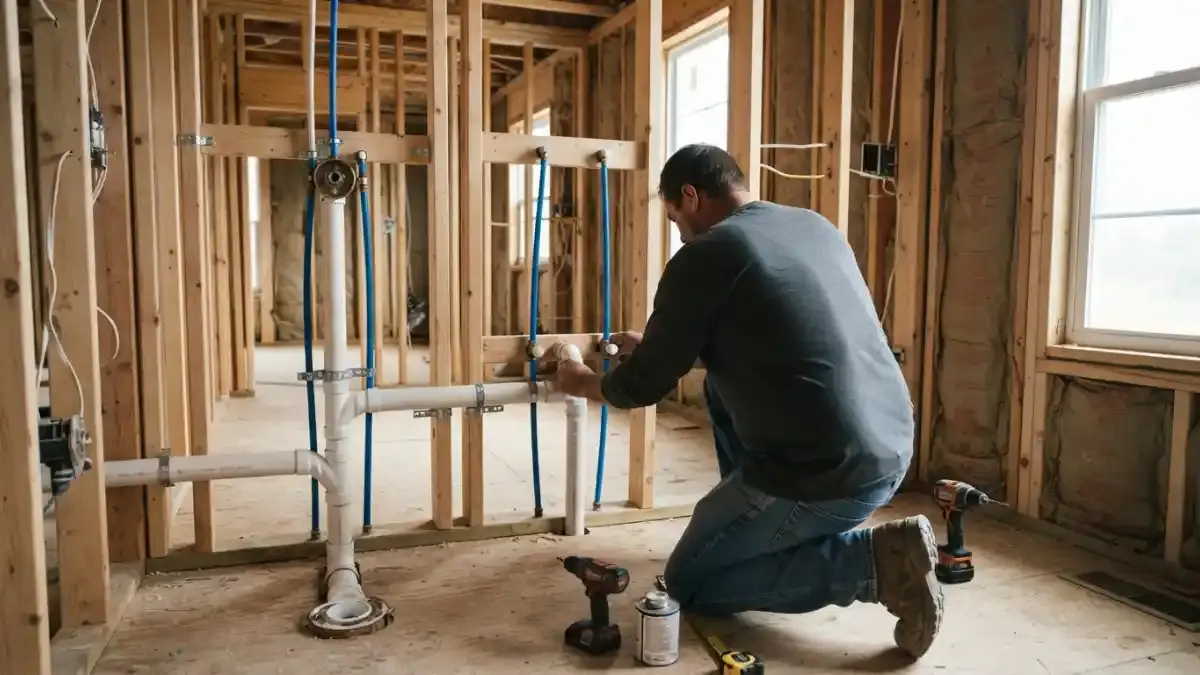
Plumbing That Gets Planned Before The Walls Close
Plumbing installation in Maywood covers anything new: a bathroom added to a back unit, a kitchen remodel that moves the sink, a laundry hookup in a garage or a new outdoor spigot. Planned plumbing costs less than fixing a mistake after drywall is up.
Good installs start with a plan. Where will the fixture sit, how far is the nearest supply and drain, and does the slope of the drain work? A drain that is too flat clogs, and one that is too steep can siphon the trap. The plumber checks these before cutting anything.
If an old fixture is simply failing, you may not need installation at all. See faucet repair and toilet repair and installation for fixes that avoid a remodel.
Common Installation Projects
These are the projects we see most.
- New bathrooms or bathroom moves.
- Kitchen sink, dishwasher and disposal hookups.
- Washing machine boxes and laundry drains.
- Outdoor spigots and hose bibs.
- Gas line extensions for ranges and dryers, where the work is within a plumber's scope.
- New water lines for additions and accessory units.
Planning A Remodel?
Call and describe what you want moved or added.
What Each Project Needs
| Project | Plumbing needed | Notes |
|---|---|---|
| New bathroom | Supply, drain, vent, shutoffs | Needs a drain path and a vent |
| Kitchen move | Supply, drain, vent, dishwasher line | Check disposal and counter plan |
| Laundry hookup | Supply box, standpipe, trap | Standpipe height and size matter |
| Outdoor spigot | Supply tap and shutoff | Check freeze protection and backflow |
| New water heater | Supply, vent, gas or power | See water heater installation |
A written scope covers each line item, so the price you approve matches the work performed.
Permits, Code And Inspections
Installations often need a permit, and the rules depend on the city. California plumbing work follows the California Plumbing Code, which is part of Title 24, and local building departments enforce it. Ask your building department what applies and have the plumber confirm who pulls the permit.
Inspections happen at set stages, usually before walls close. Skipping them can cause trouble later with insurance or a sale, so make sure the scope names the permit and the inspection.
For new construction work and larger projects, ask the plumber how the schedule fits with the general contractor so water and drain work happen in the right order.
Working Around An Existing House
Older houses hide surprises. Walls may hold galvanized pipe, drains may be cast iron and framing may not leave room for new runs. The plumber looks before quoting and tells you if the existing pipe should be replaced as part of the project, which can lead to a repiping conversation.
Landlords adding a unit, owners converting a garage and families expanding a bedroom wing all hit the same wall: the old lines may not support new fixtures. Sizing and pressure checks tell you whether they can.
What Affects The Price Of Installation
A planned job can be priced in detail before work starts.
Code And Rules To Know
New fixtures and lines follow the California Plumbing Code (based on the Uniform Plumbing Code, or UPC), and a licensed plumbing contractor holds the C-36 classification from the Contractors State License Board. Ask who pulls the permit and book the inspection before walls are closed.
Questions We Hear
Contact a plumber at the design stage, before framing closes. That lets the plan account for drain slopes, vents and access.
Yes. Tell the plumber the model so rough-in and parts are checked before the visit.
Often yes. Rules vary, so ask the building department in your city and have the plumber confirm.
Yes. Share the schedule and the plans, and the plumber coordinates rough-in and finish stages.
Often yes, but the drain path and the vent matter. The plumber checks the slab and the nearest drain before quoting.
Emergencies such as a failed toilet or heater are handled on the repair pages, for example water heater replacement. This page is for planned work.