
When Repairs Stop Being Enough
A repipe in Maywood replaces the water supply lines inside the house. It is a big job, so it makes sense only when the pipes are failing as a group. One pinhole leak is a repair. Three in a year, rusty water at every tap and weak pressure through the house is a pattern, and the pipe is telling you it is finished.
Houses built in different decades have different pipe. Galvanized steel was common in older homes and corrodes from the inside, narrowing the pipe and shedding rust. Copper lasts much longer but can develop pinholes. Some later plastic systems have known failure patterns. Your county assessor record lists the year your house was built, which helps narrow what you have.
A plumber confirms the pipe by looking at it. Open a cabinet, an attic or a crawlspace and the pipe material is usually visible.
Signs Your Pipes Are Wearing Out
These are the signs we hear about most before a repipe.
- Repeated pinhole leaks or leaks at different spots.
- Rusty or brown water when you first open a tap.
- Low pressure at several fixtures, not one.
- Green or white crust on exposed pipe and fittings.
- Metallic taste or smell in the water.
- A water bill that rises without a change in use.
Wondering If You Need A Repipe?
Call and describe the pipe material and the symptoms.
Pipe Materials Compared
| Material | Strengths | Watch for |
|---|---|---|
| Copper | Long life, heat tolerant | Pinholes in some water, higher cost |
| PEX | Flexible, fewer fittings, faster install | UV damage outdoors, needs correct fittings |
| CPVC | Lower cost, common in some homes | Can become brittle with age and heat |
| Galvanized steel | Old standard | Corrodes inside, usually replaced |
Local code and the building decide what is allowed, and the plumber explains which materials suit your house.
What A Repipe Involves
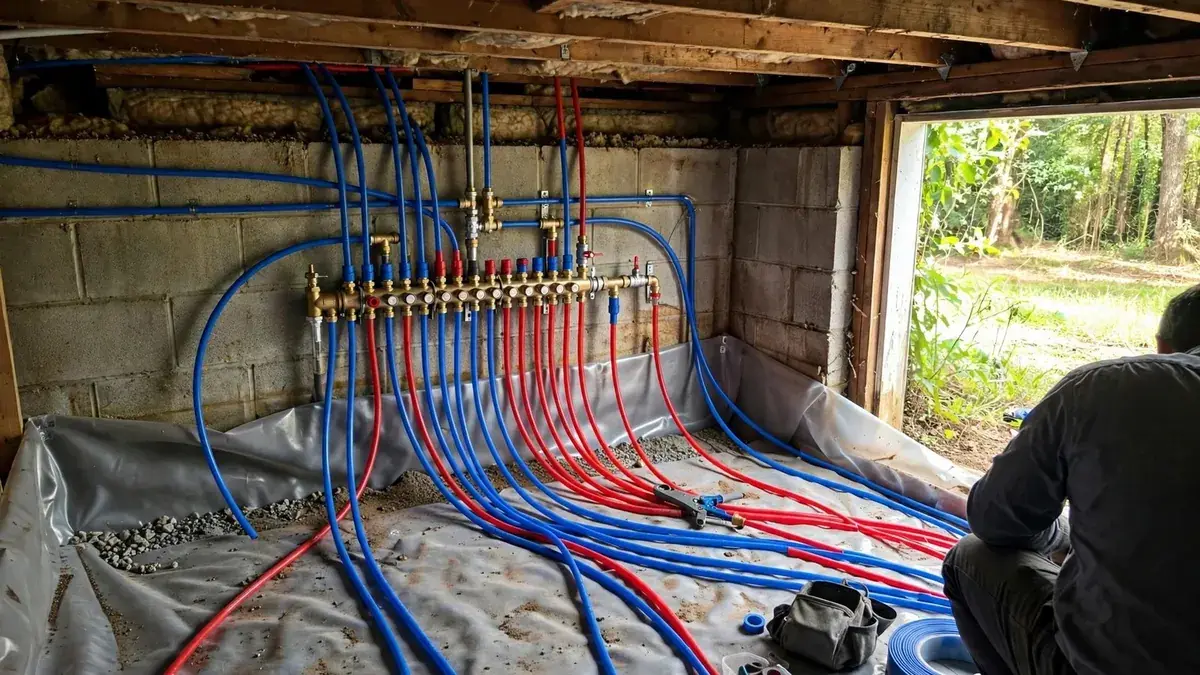
The plumber maps the new routes, shuts off the water, opens small sections of wall where needed and runs new supply lines to each fixture. Walls are patched after the lines are tested under pressure. A whole-house repipe often takes a few days, and water is off for part of each day.
The work changes the house for a day or two, so plan for access to every wall that carries pipe. Ask about permits and inspections, since California plumbing work follows the California Plumbing Code and local rules vary.
A partial repipe is another option. If only one bathroom or one wall is failing, replacing that section may make sense. See burst pipe repair for single-section fixes.
Water Quality And Pipe Life
Water chemistry affects pipe life. Utility reports for nearby systems list total hardness well above soft water, including 238.2 ppm in the 2025 South Gate report and an average of about 146 ppm for City of Commerce groundwater. These are calculated from the reports, and we have not found a published figure for the Maywood Mutual Water companies.
Ask your supplier for its annual water quality report, and ask the plumber what the pipe looks like inside where it has been cut. See water softener and filtration if scale is a concern.
What Affects The Price Of A Repipe
A repipe is planned, so the price can be detailed in writing before work starts.
Code And Rules To Know
Repiping needs a permit and an inspection in most California cities, and new drinking water pipe and fittings must be lead-free under state law. The California Plumbing Code (based on the Uniform Plumbing Code, or UPC) lists approved materials such as copper and PEX. Ask for the final inspection sign-off.
Questions We Hear
Repeated leaks, rusty water and low pressure at many taps are the signs. A plumber looks at the pipe material and its condition before recommending anything.
A typical house takes a few days. The plumber gives a schedule at the price stage.
Water is off for part of the day, and the plumber tells you the schedule. Plan to use another bathroom or a neighbor's for a short time.
Both work. PEX is faster to install and flexible, and copper has a long record. The best choice depends on the house and local code.
Often yes. Rules vary by city, so ask the building department and have the plumber handle it.
Yes. If a single area is failing, a partial repipe can be enough. The plumber explains the trade-offs.