
Hidden Leak Right Now? Start Here
For emergency leak detection in Maywood, call the 24/7 line if water is coming through a ceiling or wall, if a floor feels warm, or if you hear running water with every tap closed. Close the main shutoff, and the dispatcher will tell you what else to turn off.
A leak you cannot find is a leak that keeps growing. Wet drywall can mold within a day or two, and a pinhole under a slab can wash out soil. Reach out as soon as you suspect one, even if the water looks small.
Meter Still Running Or A High Water Bill
The two minute meter test
Turn off every tap, the washer and the ice maker, then watch the meter dial or the small leak indicator. If it keeps moving, water is going somewhere. If it stops when you close the main valve at the house, the leak is inside the house. If it keeps moving with the house valve closed, the leak is between the meter and the house.
Why bills rise without a visible drip
A running toilet, a failing irrigation valve or a buried line can waste hundreds of gallons a day. Ask your water supplier for your usage history, and compare month to month. A step up that never comes back down usually means a leak, not a change in habit.
Water Bill Jumped?
Call and describe what the meter is doing. We will tell you what to check first.
How We Find The Leak
| Method | What it does | Good for |
|---|---|---|
| Pressure test | Isolates which line holds pressure | Supply lines, slab leaks |
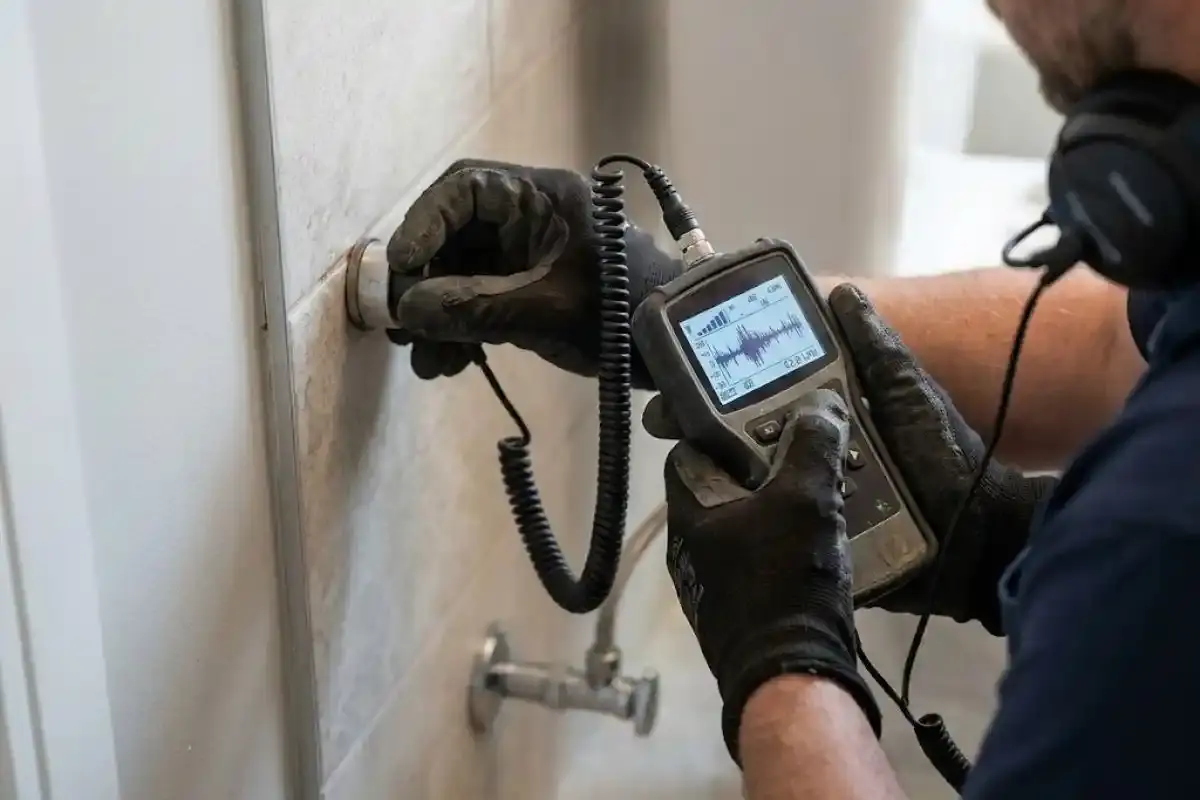
| Acoustic listening | Hears the sound of escaping water | Pipes in walls, floors and yards |
| Thermal imaging | Shows temperature changes from hot water leaks | Warm spots, radiant lines |
| Moisture meter | Maps wet areas without cutting drywall | Ceilings, walls, cabinets |
| Camera | Looks inside drain lines | Drain leaks, see sewer inspection |
Different leaks need different tools. A good plumber tells you which one is being used and what it can and cannot prove.
Ceiling And Wall Leaks
A stain on a ceiling is rarely directly under the source. Water travels along framing and pipes before it shows, so the first move is to find the highest wet point and trace it back. Sources include shower pans, supply lines to upstairs fixtures, roof leaks and HVAC condensate lines.
We confirm a plumbing source before you open a wall. If the leak is in a drain or supply line, the repair is straightforward and covered under burst pipe repair. If water is coming from the roof or the air conditioning, the plumber tells you so and you call the right trade instead of paying for a plumbing repair you do not need.
Under The House, Yard And Irrigation
Homes with raised floors and crawlspaces can leak for a long time before a stain shows, and the wet earth and musty smell are the clues. A plumber checks the crawlspace for wet soil and corroded pipe and tests the line for pressure loss.
Buried lines in the yard are harder. Water that rises through lawn or a driveway, or a meter that runs with the house valve closed, points to the service line. The water service line repair page explains what a repair involves. A leaking irrigation valve is a smaller version of the same problem and is common where sprinklers run on timers.
If the leak sits under a concrete floor, see slab leak repair.
What To Do While You Wait
These steps help the plumber and any insurance claim later.
- Close the main water valve if water is actively spreading.
- Take photos of wet areas, stains and the meter for your records.
- Move furniture and belongings away from the wet spot.
- Do not cut into drywall yourself, since opening the wrong spot makes the repair harder.
- Write down when the stain appeared and any change in the water bill.
What Affects The Price
The leak detection visit is priced before it starts, and any repair is quoted separately.
Code And Rules To Know
Finding a leak is not regulated by a single code, but repairs that follow it are. The California Plumbing Code (based on the Uniform Plumbing Code, or UPC) lists approved pipe materials, and California requires lead-free pipe and fittings for drinking water. Ask what material the plumber will use for the repair.
Questions We Hear
Yes. The line is answered 24 hours a day, every day. If water is actively spreading, a plumber can be sent to shut it off and begin finding the source.
Watch for a water meter that moves with everything off, a rising water bill, damp or stained walls, warm spots on floors, low pressure and the sound of running water. Any one of them is worth a call.
Often yes. Acoustic tools, moisture mapping and thermal imaging help narrow the spot so any opening is small. The plumber explains the plan before opening anything.
Policies differ, and many cover sudden damage but not slow leaks or the pipe itself. Ask your insurer, and keep photos and the plumber's written findings.
Detection finds the source. Repair fixes it. They may happen in one visit for easy leaks or in two for hidden ones.
Yes. Commercial leak detection involves larger systems and sometimes shared lines, so details matter. See commercial plumbing and tell us the building type on the call.