
Water Line Leak: What To Do First
For emergency water line repair in Maywood, call the 24/7 line if water is rising through the lawn or driveway, if there is no water at all or if the meter runs with the house valve closed. Close the house valve at the front of the house and note whether the meter keeps moving.
If the meter keeps moving with the house valve closed, the leak is between the meter and the house, which is the service line. If the water supplier owns the line up to the meter, tell the dispatcher and the plumber will explain who is responsible for which part.
Where The Responsibility Changes
A service line has two parts. The public side runs from the main in the street to the meter and is usually the supplier's responsibility. The private side runs from the meter to the house and is usually yours. The exact point varies by supplier, so ask yours where it sits.
Many Maywood addresses buy water from one of the Maywood Mutual Water companies, and others are served by neighboring systems. Your bill names your supplier, and the supplier can tell you what it maintains. Call the supplier if the leak looks like it is on its side.
Meter Running With The House Valve Closed?
Call and describe what the meter is doing.
Signs Of A Service Line Problem
Any of these is worth a call.
- Wet or sunken ground between the meter and the house.
- A meter that runs with the house valve closed.
- Low pressure at every fixture at once.
- A sudden jump in the water bill.
- Dirty water after a repair or a main break.
- Water pooling in the yard with no rain or sprinklers.
Low Water Pressure: Where The Cause Is
| Symptom | Likely cause | Next step |
|---|---|---|
| Low at one fixture | Clogged aerator or valve | Clean or repair the fixture |
| Low at all fixtures | Leak, partly closed valve or pressure regulator | Check valves, test the regulator |
| Low after a repair | Debris or a closed valve | Flush the line and check valves |
| Sudden loss of pressure | Break in the service line | Close the valve and call |
A failed pressure regulator can cause high or low pressure, and a plumber tests it with a gauge.
Repair Or Replace The Line
Spot repair
A localized leak can be repaired by digging to the break and replacing a short section. It works when the rest of the pipe is in good shape.
Replacement
A line with repeated leaks or old, corroded pipe is better replaced. Trenchless methods can replace some lines without trenching a whole yard, depending on the layout.
Buried Line Leaks And How They Are Found
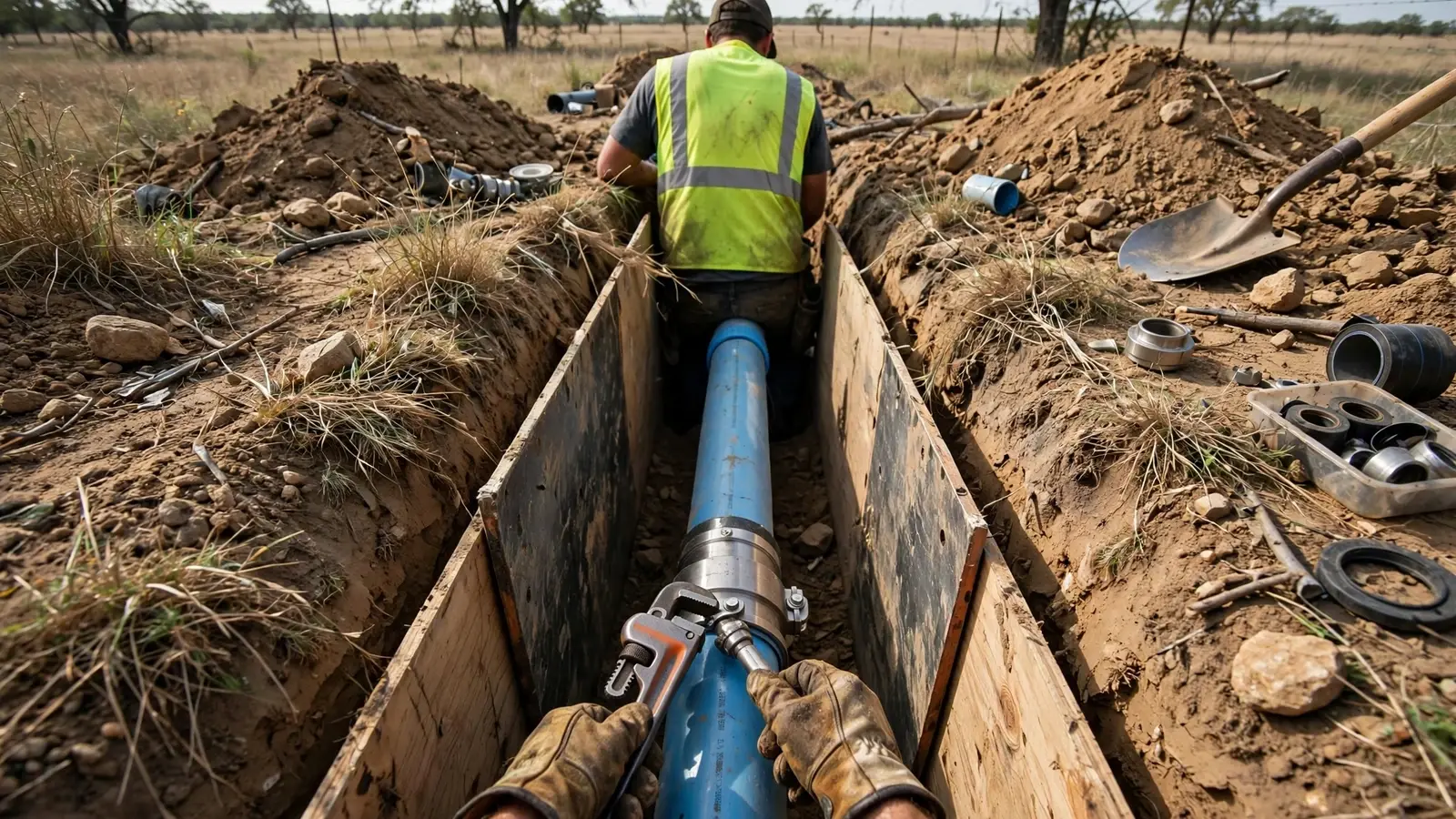
Buried leaks are found with a pressure test and acoustic tools that listen along the line. The plumber marks the spot so a small hole is dug rather than a long trench. See leak detection for how those tools work.
Before any digging, the plumber should check where other utilities run. Calling 811 before digging is standard practice in California, and the plumber will tell you how that is handled for your job.
What Affects The Price
You hear the price before digging starts.
Code And Rules To Know
The line between the meter and the house is usually the owner's responsibility, and the line up to the meter belongs to the supplier. Repairs follow the California Plumbing Code (based on the Uniform Plumbing Code, or UPC) and often need a permit. Call your supplier to confirm where the boundary is.
Questions We Hear
Yes. The line is answered 24 hours a day. Close the house valve and call.
If the meter runs with the house valve closed, the leak is between the meter and the house. A plumber confirms it with a pressure test.
Usually the supplier maintains the public side and the owner maintains the private side. Your supplier can tell you where the line changes.
It depends on the layout and the pipe. The plumber checks and explains whether trenchless methods fit your yard.
It can be a leak, a partly closed valve or a failed regulator. A plumber tests the pressure with a gauge before suggesting a fix.
Often yes, especially if work is in the street or public right of way. Ask the building department and your supplier, and have the plumber handle it.