
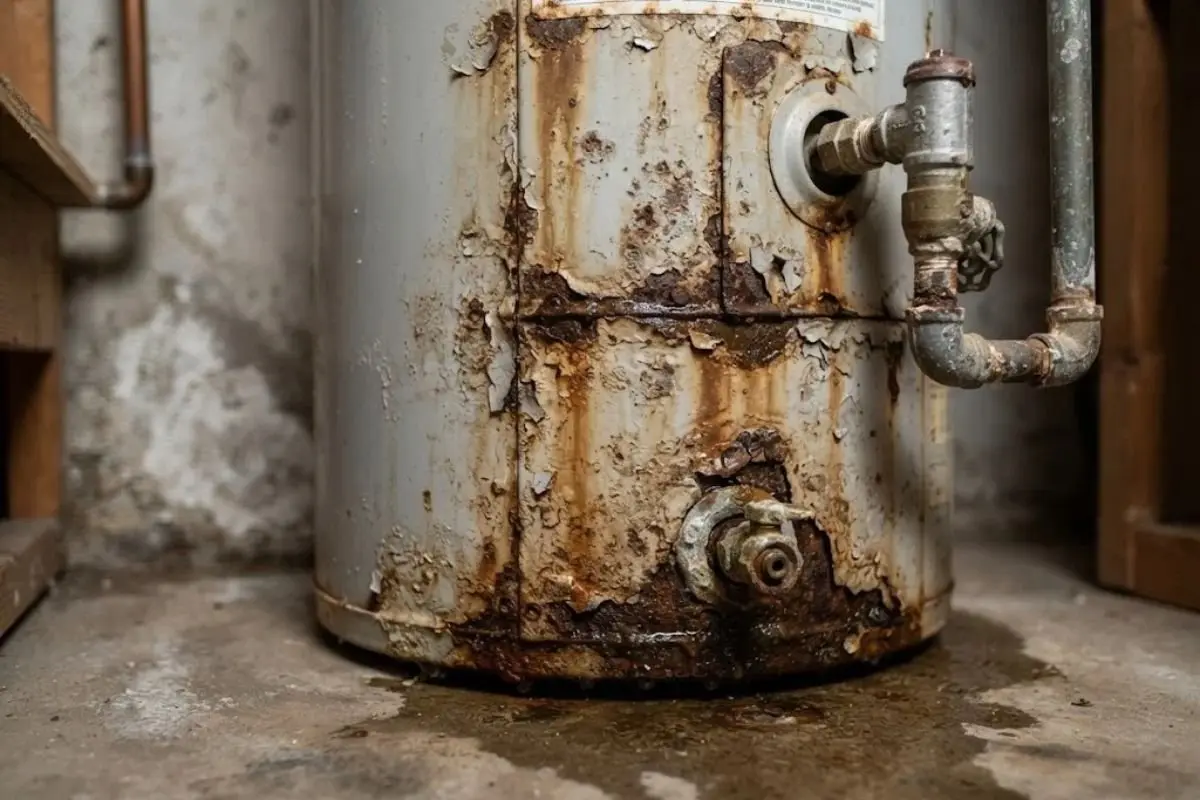
Failed Water Heater: What To Do Right Now
If your tank has failed and you need emergency water heater replacement in Maywood, call the 24/7 line. Close the cold water supply at the top of the heater, switch off power or turn the gas control to pilot, and open a hot tap to relieve pressure. Then call so a plumber can plan the swap.
Same-day appointments are offered when available. If a replacement has to wait, the plumber can shut the leak safely so you are not living with a flooded closet until the new unit arrives.
Signs It Is Time To Replace, Not Repair
Several of these together usually point to replacement.
- Water pooling at the base of the tank, not at a pipe fitting.
- Rusty or brown hot water that stays discolored after the lines are flushed.
- A heater past about ten years that now needs repeated repairs.
- Rumbling noises from sediment that a flush does not cure.
- Hot water that runs out faster than it used to, even with the thermostat set correctly.
Tank Failed Or Flooding?
Close the cold supply valve and call. We can often schedule a replacement the same day.
Choosing The Replacement Unit
| Option | Good fit when | Things to know |
|---|---|---|
| Standard gas tank | A gas line is already in place | Needs venting and combustion air |
| Standard electric tank | No gas line, simple install | Needs the right breaker and wire size |
| Tankless gas or electric | Space is tight, long showers matter | Higher upfront cost, see tankless water heater |
| Hybrid heat pump | Low running cost is the priority | Needs air space, makes noise and chills the room |
A plumber matches the unit to household size, peak use and the space available, then writes the plan down so you can compare it with other quotes.
What Replacement Day Looks Like
The plumber shuts the water, drains the old tank and disconnects it. The new unit is set, connected, vented and checked for leaks and pressure, and the plumber tests the relief valve and a hot tap before leaving.
Local rules decide whether a permit is needed and whether the unit must be braced or fitted with an expansion tank. California plumbing work follows the California Plumbing Code, and permit rules differ by city, so ask your plumber and your building department what applies to your address.
The old tank is removed so you are not left with a leaking drum in the garage. Ask the plumber to confirm what happens to it before work starts.
Water Quality And Heater Life
Water hardness shortens the life of a tank, and published reports for nearby systems show how much it varies. The 2025 City of South Gate report lists total hardness of 238.2 ppm, which is about 14 grains per gallon. Cal Water reports an average of 146 ppm for the City of Commerce groundwater, about 8.5 grains per gallon. Both figures are calculated from the reports, not stated by them in grains.
We have not found a published hardness figure for the Maywood Mutual Water companies, so test your tap or ask your supplier for its annual water quality report. If your supplier reports hard water, a softener such as the one described on the water softener and filtration page can protect the new unit.
What Affects Replacement Cost
You get a clear price after the plumber sees the existing setup.
Code And Rules To Know
A replacement water heater in California needs seismic bracing, a proper relief valve discharge pipe and, in most cities, a permit from the local building department under the California Plumbing Code (based on the Uniform Plumbing Code, or UPC). Ask the plumber who pulls the permit and book the inspection.
Questions We Hear
Yes. The emergency line is answered 24 hours a day. We offer same-day appointments when available, and the plumber stops active leaks first.
A straightforward swap usually takes a few hours. Moving venting, running a new gas line or installing a tankless unit takes longer, and the plumber will tell you the likely time at the price stage.
Keep the fuel you have unless you have a reason to switch. Changing fuel means new venting, a new gas line or a new circuit, which raises the cost.
Yes. The plumber asks how many people use hot water, when peak use happens and how many bathrooms you have, then matches tank size or tankless flow rate to that.
Permit rules vary, so ask the building department in your city. A plumber familiar with the area can tell you what is usually required and handle the paperwork if needed.
Ask the plumber before work begins so the plan is clear. The goal is that you are not left with a leaking tank to move yourself.