
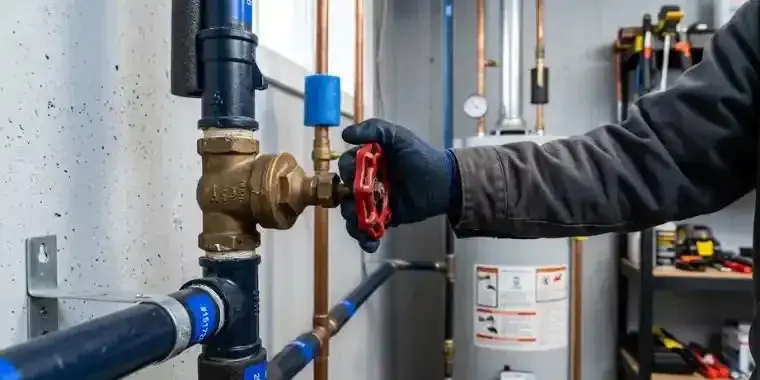
Shut Off The Water First
When a pipe bursts, water keeps flowing until you stop it, and every minute adds to the cleanup. Go straight to the main shutoff. In many Southern California homes it sits near the street side of the house, in a small box at the meter, or on an exterior wall close to the water heater. Turn a round handle clockwise until it stops. A lever handle closes when it sits crosswise to the pipe.
If the valve will not turn, do not force it with a long pipe wrench. A stuck valve can snap and make things worse. Call dispatch, say the valve is stuck and the plumber will bring the tools to deal with it. The curb shutoff at the meter is a second option, and some cities require a special key for it, so ask before you try.
After the main is closed, open a faucet at the lowest point of the house, such as a hose bib. This drains pressure that is left in the pipes and slows the leak. Leave it open until the plumber says otherwise.
Make The Area Safe
Water and electricity do not mix, so this step matters as much as stopping the flow.
- Do not stand in water near outlets, power strips or appliances.
- Switch off breakers for the wet rooms only if the panel is dry and you can reach it safely.
- Unplug electronics that are not yet wet and move them up.
- Keep children and pets away from the wet area and from broken glass.
- If water is coming through a light fixture or ceiling, stay out of that room and tell dispatch.
If you smell gas, leave the house and call the gas company from outside. That is a separate emergency.
Pipe Burst Right Now?
Close the main valve and call. Dispatch is around the clock.
Maywood Homes And Pipe Age
Maywood is a small city of older homes and small multi-unit buildings, and the age of a house sets what is inside the walls. Houses from the early and mid 1900s may still have galvanized supply lines, and a failure in one often means the rest of the run is worn too.
Your county assessor record lists the year your house was built. Give it to dispatch and the plumber arrives with a better idea of what to expect. Southern California rarely freezes, so bursts here come from age, pressure and corrosion rather than ice.
We take calls from Bell and Huntington Park as well, so the steps here apply there too.
Reduce The Damage While You Wait
Lift rugs, boxes and furniture legs out of the water. Use towels and a mop to move water toward a floor drain or an exterior door. A wet vacuum helps if you have one, but only on dry outlets. Open windows if the weather allows, because air movement slows mold.
Take photos and short video of the leak, the wet areas and anything damaged before you move things. Your insurer will ask for them. Keep receipts for anything you buy to limit the damage, such as a wet vacuum rental or fans.
What The Plumber Will Do
On arrival the plumber confirms the water is off, finds where the pipe failed and checks nearby pipe for the same problem. A pipe often fails because of age, pressure or corrosion, and the next section of pipe may be close behind it. You should get a clear price before work starts and a clear explanation of the repair options.
The repair can be a short section replaced with new pipe, or a wider replacement if the material is worn. Read burst pipe repair for what each path involves, and repiping for when replacing the whole line makes more sense than patching.
What Causes Pipes To Burst In Southern California
| Cause | What it looks like | What helps |
|---|---|---|
| Old galvanized steel | Rust-colored water, low pressure, pinhole leaks | Replace the run, see repiping |
| High water pressure | Banging pipes, leaks at fittings, failing hoses | Pressure regulator check |
| Corroded copper | Green or blue stains, pinholes | Replace the affected section |
| Tree roots or soil movement | Wet spot in the yard, drop in pressure | Line locate and repair |
Cleanup In The First Day
Once the water is off and the plumber has stabilized the pipe, start drying. Standing water, soaked drywall and wet carpet padding are the biggest risks, because mold can start growing within a couple of days in damp, warm air. Pull up rugs, lift furniture off wet floors and run fans toward open windows or doors.
Do not use a heater to dry a room quickly, since heat drives moisture into materials. Dry air and airflow work better. If the water was clean supply water, many owners handle small areas themselves. If a large area is soaked or the water spread into walls, a dry-out company with moisture meters is worth a call.
Remove anything that cannot be dried, such as soaked cardboard and padding, and photograph it before throwing it away. Your insurer may want to see it.
Talking To Your Insurer Or Landlord
Call your insurer early. Ask what your policy says about sudden pipe failure and what documents they need. Most want photos, the plumber's invoice and a list of damaged items. Do not sign away rights or accept a first offer on a large claim without reading it.
Renters should tell the landlord in writing as soon as possible and keep a copy. Your own renters policy may cover your belongings, while the building owner's policy covers the structure. If the landlord is slow to respond, document that too.
Preventing The Next One
After a burst, ask the plumber to check water pressure. Pressure above the range many manufacturers recommend stresses pipes and fittings, and a regulator is a small part that can protect the whole house. Ask also about the condition of nearby pipe.
Know where your main shutoff is and test it once a year so it turns when you need it. Label it. Everyone in the household should know the location. These small steps turn a surprise into a manageable repair.
Repairs follow the California Plumbing Code, which is based on the Uniform Plumbing Code (UPC), and larger pipe replacements may need a permit.
Questions We Hear
Shut off the water first, then call both. A plumber can stop the damage fast, and a landlord can approve repairs in a rental. Tell dispatch whether you own the unit so we know who approves the work.
Many policies cover sudden water damage, but not slow leaks or neglect. Your policy decides, so call your insurer and ask. Keep photos and receipts either way.
A temporary clamp or sleeve may slow a pinhole leak, but a burst section needs a proper repair. If you cut into a wall, you also risk electrical lines, so call a plumber.
A simple section repair often takes a few hours, and a wider replacement takes longer. The plumber will give a realistic time once the pipe is exposed.
Yes. Our line is answered 24 hours a day, every day, and a plumber is sent as soon as one is available.