
Start With Your Bill
Compare this bill to the last few. If usage jumped without guests, a new irrigation schedule or a long fill of a pool, a leak is a good suspect. Your bill shows usage in units your supplier names, and it may show daily use as well.
A leak runs all day and night, so look for a steady baseline that stays high even when nobody is home.
The Meter Test
This test shows whether water is moving when nothing should be using it.
- Turn off every tap, the dishwasher, the washer and the ice maker.
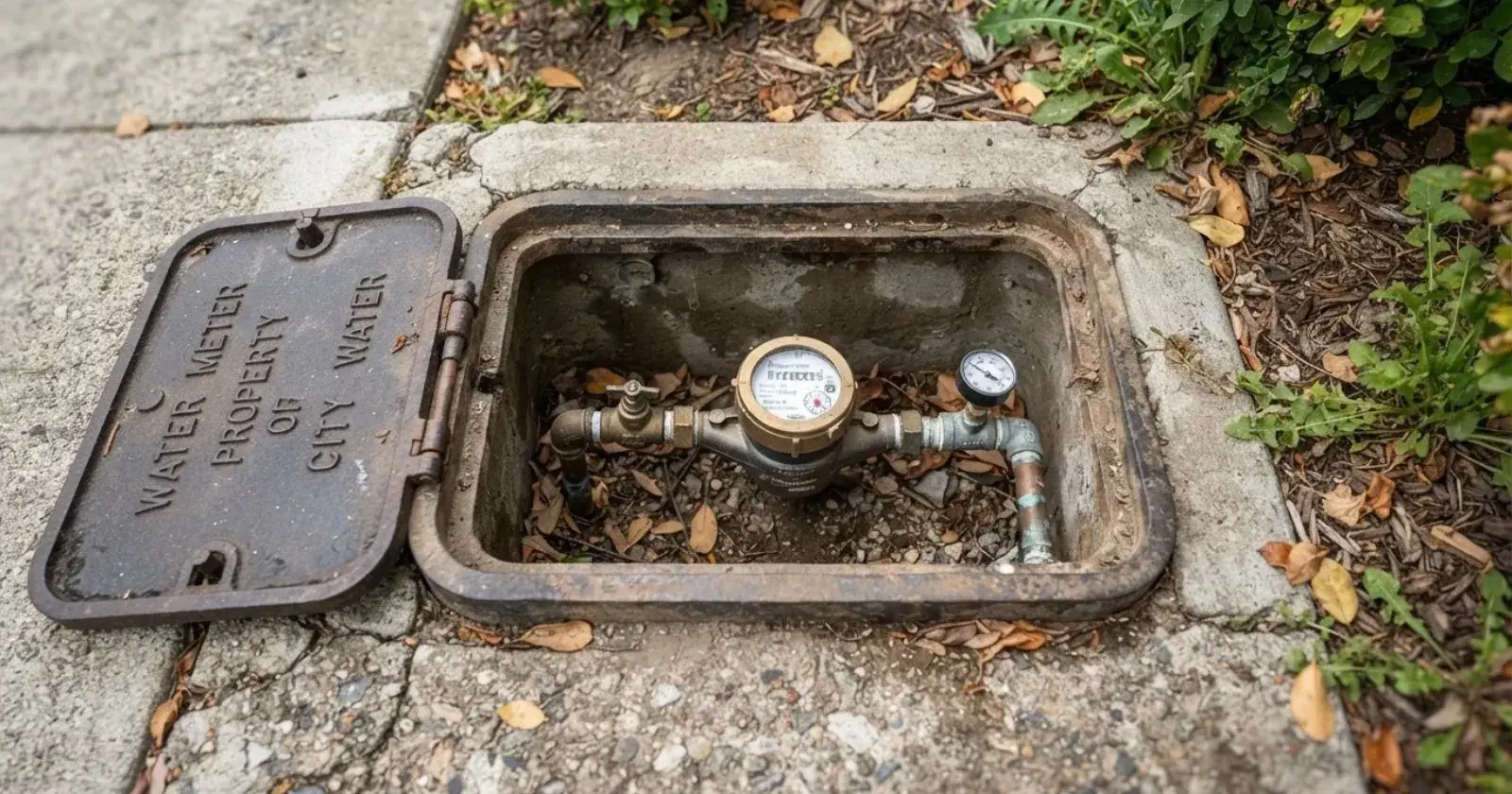
- Open the meter box and find the small leak indicator, often a triangle or dial that spins.
- If it spins or the numbers change after ten minutes, water is moving somewhere.
- Write the reading, wait an hour with no water use and read it again.
- Close the main valve and check again. If the meter stops, the leak is inside your property after the meter.
If the meter keeps moving with the main closed, the problem is likely on the supplier side of the valve. Call your water supplier.
Hidden Leak Suspected?
Call and we can send a plumber with detection tools.
Check Who Owns The Pipe
In Southern California, the supplier usually owns the line to the meter, and the homeowner owns the line from the meter into the house. Your water supplier can tell you where the boundary is for your address.
If your leak sits on your side of the meter, the repair is yours. If you rent, tell the landlord first so repairs are approved.
We take calls from Bell and Commerce as well, so the steps here apply there too.
The Toilet Dye Test
Toilets are the most common hidden leak. Put a few drops of food coloring in the tank and wait fifteen minutes without flushing. If color shows in the bowl, the flapper is leaking. A worn flapper is a cheap fix, and a toilet that leaks all day can use a lot of water. See toilet repair and installation for what we replace.
Other Places A Leak Hides
| Place | Clue | Next step |
|---|---|---|
| Slab under the house | Warm floor spot, sound of water, damp carpet | Slab leak detection |
| Wall or ceiling | Stain, peeling paint, musty smell | Moisture and acoustic detection |
| Yard line | Soggy patch or green strip with no rain | Line locate, service line repair |
| Irrigation | Bill spikes in warm months | Check zones and valves |
| Water heater | Damp floor under tank | Replace or repair |
How A Plumber Finds It
Plumbers use pressure tests, listening devices and thermal imaging to find a leak without opening walls blindly. The goal is to open the smallest area possible. Leak detection explains the methods, and slab leak repair covers the repair paths when the leak is under concrete.
What To Do Once You Find A Leak
Once the meter test shows a leak, close the main valve if water is spreading, and call a plumber. If the leak is slow, you can close the main when nobody needs water and open it only when needed, but this is a short-term step.
Write down the meter reading and the date, and keep your bills. They show when the leak began, which matters if you ask your supplier for an adjustment or your insurer for help. Ask the plumber to note where the leak was and what caused it.
Slab And Wall Leaks
Leaks under a slab or inside a wall are harder, since you cannot see them. Signs include a warm spot on the floor, a sound of running water at night, damp baseboards or a musty smell. Hot water lines under a slab are the common culprit, because heat and soil movement wear the pipe.
A plumber can pinpoint the leak with a listening device and pressure test, then choose between a spot repair through a small opening, rerouting the line through the attic or walls, or replacing the line. See slab leak repair for the paths.
Keeping Bills Honest
After a repair, compare the next bill to the prior ones. If usage is back to normal, the leak is fixed. If it is not, check the toilet, the irrigation and the water heater again, and consider a second look at the supply line between the meter and the house, which water service line repair covers.
Check your meter once a month for a few minutes with everything off. It is the cheapest early warning there is.
Irrigation And Outdoor Leaks
Sprinkler systems are a quiet source of waste. A broken head, a stuck valve or a cracked line can run for weeks. Run each zone and look for geysers, soggy ground and puddles. If the bill rises in warm months, check zone run times and any drip lines.
Hose bibs can also drip behind a bush. Look at each one while the water is on.
What To Keep
Keep the bills, the meter readings and the plumber's notes in one place. If your supplier offers a leak adjustment, these papers are what they ask for. A short note of the dates and the repair is usually enough.
A Ten Minute Walk-Through
Start at the water heater and look at the floor and the pipes for dampness or crust. Go to each bathroom and check under the sink and behind the toilet. Look at the washing machine hoses, which crack with age, and at the dishwasher and ice maker lines. Outside, check hose bibs and the area around the meter.
Touch walls near plumbing runs. A cool, damp spot on a dry day is worth following up. Smell is also a clue, since a musty odor in a closed room can mean water behind a wall. None of this replaces a meter test, but it can save a service visit.
According to the guidelines many suppliers publish, a meter that moves with every fixture off is the clearest sign of a leak, so a quick check of the meter before you call is always worthwhile.
Questions We Hear
A small continuous leak can add up to a large amount in a month. That is why a meter test is worth ten minutes.
Some suppliers have a leak adjustment policy. Ask yours what it requires.
You can spot clues, but locating it needs equipment. A plumber can do it with little damage.
Yes, and it is the most common cause. Do the dye test.
Yes. If water is actively spreading, call our line at any hour.