
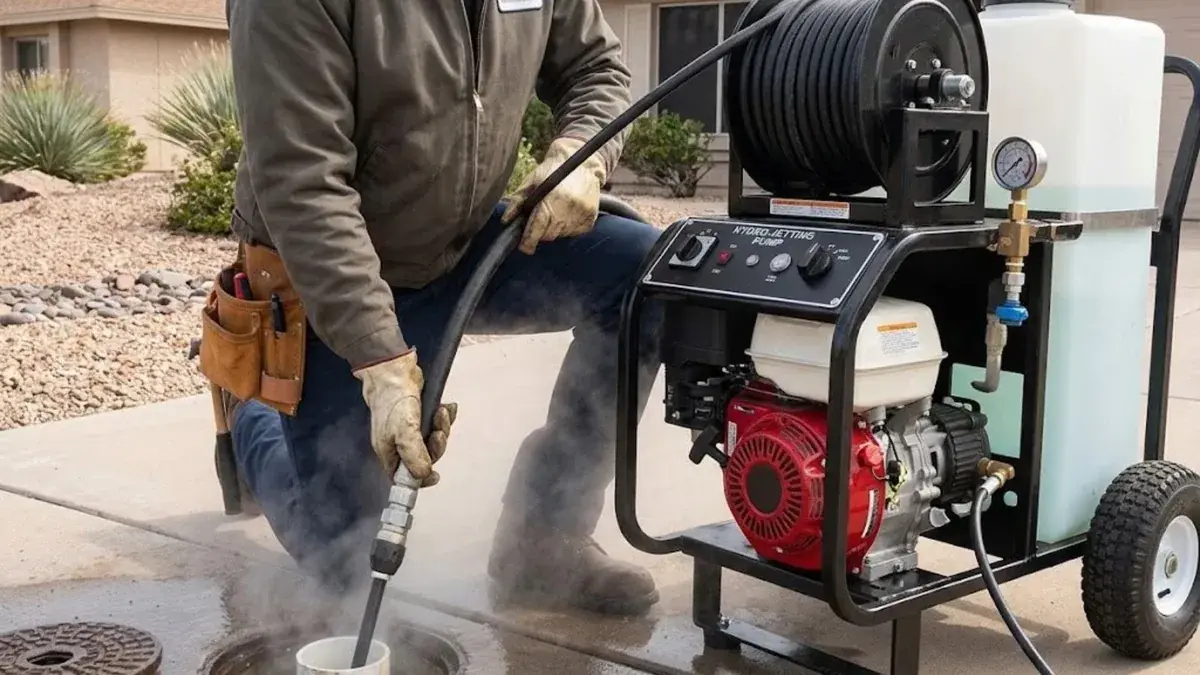
What Hydro Jetting Does That A Cable Cannot
Hydro jetting in Maywood uses a hose with a nozzle that fires high-pressure water in several directions inside the pipe. The water cuts through grease, scrapes scale off the walls and flushes the debris downstream, leaving the pipe close to its original diameter.
A cable machine works differently. It drills a hole through the blockage, and the pipe walls keep the grease and sludge that line them. That is why a drain can seem fixed for a few weeks and then clog again. Jetting removes the buildup, and the repeat clog usually goes away.
It is a stronger tool, so it is not always the right one. Pipe that is cracked, collapsed or badly corroded can be damaged by pressure, which is why a camera look often comes first. See sewer inspection for what that involves.
Backups That Call For Jetting Right Away
Call the 24/7 line if a main drain has backed up more than once, if sewage is coming up through a floor drain or tub, or if a restaurant or shop drain is full of grease. In those cases a plumber may recommend jetting after clearing the immediate blockage with a cable.
While you wait, stop all water use, keep pets and children away from overflow and do not pour chemicals down the drain. A jetter needs a clear access point, so tell the dispatcher where your cleanout is.
Drain Keeps Coming Back?
Call and ask whether jetting is the right fix for your line.
Cable, Jetting And Camera Compared
| Method | Best at | Watch out for |
|---|---|---|
| Cable or snake | Opening a stopped line quickly | Leaves grease and scale in place |
| Hydro jetting | Cleaning pipe walls, grease, scale, soft roots | Not for damaged or collapsed pipe |
| Camera inspection | Finding the cause of a repeat clog | Cannot clear a blockage by itself |
Many plumbers jet after a camera run, so the pressure is set for the pipe they see.
Where Jetting Pays Off
These are the situations where we recommend jetting most often.
- Kitchen and restaurant lines that collect grease.
- Older cast iron pipe with rough walls and scale.
- Main lines with repeat soft root intrusion.
- Apartment or duplex shared lines that clog every few months.
- Lines where a snake got stuck or only opened a small hole.
Jetting On Commercial And Shared Lines
Shops and small restaurants along Slauson Avenue and Atlantic Boulevard share lines with neighbors, and one grease-heavy tenant can clog a whole building. A jetting visit on a set schedule often costs less than repeated emergency calls.
Commercial calls have a few extra details. Tell us the building type, how many units share the line and where the cleanout or grease interceptor sits. See commercial plumbing for the scope of those visits.
We cover Maywood ZIP code 90270, and nearby 90201, 90255, 90040 and 90280, so a call from a shop in Commerce or a duplex in Bell is handled the same way.
What Affects The Price
You hear the figure before the jetter comes off the truck.
Code And Rules To Know
Jetting works inside lines governed by the California Plumbing Code (based on the Uniform Plumbing Code, or UPC) and by your city's sewer rules. A plumber should locate a cleanout before jetting and check pipe condition first, since high pressure can damage a pipe that is already cracked.
Questions We Hear
Yes. The line is answered all day and night, and a plumber can begin with a cable to restore flow, then plan jetting for the root cause.
Not always. Cracked, collapsed or badly corroded pipe can be damaged by pressure. A camera pass first shows whether jetting is sensible.
That depends on the use. A restaurant line might need it every few months, a home line only when clogs return. The plumber can suggest a schedule after seeing the pipe.
It clears soft and small roots and cleans the pipe afterward. Thick roots and root balls may need a cutter first, and a root-damaged pipe may need repair.
The water goes down the pipe to the sewer, not into the room. The plumber sets up at the cleanout and keeps the work area protected.
A first clog in a sink or a toilet usually just needs a snake. Try the drain cleaning page first, and move to jetting if the problem repeats.