
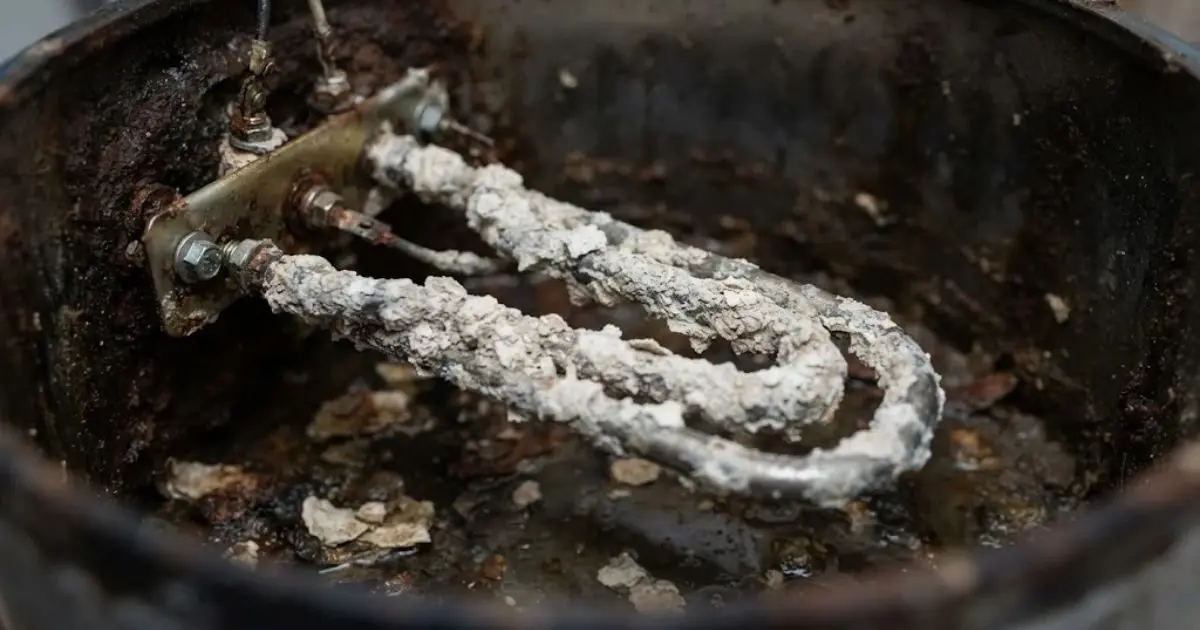
What Hard Water Does Inside A Tank
Hard water carries dissolved calcium and magnesium. When water is heated, those minerals come out of solution and settle as scale. In a tank heater the scale collects on the bottom and coats the heating element or the burner area. The heater works harder to push heat through the layer, so the bills rise and the tank wears faster.
Common signs are popping or rumbling noises as water boils under the sediment, hot water that runs out sooner than it used to, and cloudy or gritty water from the hot tap. Scale also builds in faucet aerators and shower heads, which is the easiest place to see it.
Tankless heaters are hit harder in one way. Scale narrows the heat exchanger, and the unit throws error codes or shuts down. Read tankless water heater for the descaling routine.
What The Local Reports Show
| City | Source in the report | Reported hardness |
|---|---|---|
| Huntington Park (2025) | Local groundwater and MWD water | 214 ppm groundwater, 235 ppm MWD, about 12.5 to 13.7 grains per gallon |
| South Gate (2025) | Local deep groundwater wells | 238.2 ppm, range 204 to 279, about 14 grains per gallon |
| Commerce, Cal Water system (2025) | Local wells and purchased MWD water | 146 ppm groundwater average, about 8.5 grains per gallon |
Heater Failing Today?
Call and tell us the symptoms. We can send a plumber.
Which Supplier Serves Your Address
Southeast Los Angeles County cities buy water from several systems, and the supplier is printed on your bill. Maywood and other nearby addresses may differ from the cities in the table, so ask your own supplier for its annual water quality report.
If you want a number for your own tap, a basic hardness test strip from a hardware store gives a rough answer in a minute. Do this before you spend money on a softener.
We take calls from South Gate and Huntington Park as well, so the steps here apply there too.
How We Converted The Numbers
Reports list hardness in parts per million. Water heater makers and softener sellers talk in grains per gallon, so we divided by 17.1, the standard conversion. The grains figures above are our calculation, not a number printed in the reports.
Over 10.5 grains per gallon is commonly called hard, and over 14 is often called very hard. By that measure Huntington Park is hard, South Gate sits at the edge of very hard, and Commerce is moderately hard.
What Actually Helps
Not every fix is worth buying. Start with the cheap, high-value ones.
- Flush the tank once a year to move sediment out before it hardens.
- Have the anode rod checked, since hard water uses it up and a spent rod lets the tank itself corrode.
- Set the thermostat no higher than needed, because hotter water drops more scale.
- Clean faucet aerators and shower heads with vinegar when flow drops.
- Test your own tap before buying a softener, since the city average may not match your address.
A whole-house softener helps with scale but costs money and needs salt and upkeep. Read water softener and filtration before you buy equipment.
When To Repair And When To Replace
A heater that makes noise but still heats may only need a flush. A leak from the tank body is a replacement, because a corroded tank cannot be sealed. Pilot, thermostat and element problems are repairs when the tank is sound.
Look for the date on the rating label, which often shows the manufacture date in the serial number. If the tank is past the age most makers expect and is also leaking, replacing it saves repeat visits. See water heater replacement for what that involves.
Reading Your Own Water Report
Utility reports are written for regulators, so the layout can be hard to follow. Look for the line called total hardness, often shown in milligrams per liter, which equals parts per million. Check the year, the source of the water and whether the number is an average or a range.
A range tells you more than an average. South Gate's 2025 range of 204 to 279 ppm means some days run harder than the headline number. If you are on a different system than a city in the table, the numbers may differ, so use your own report.
A Simple Annual Routine
A small yearly routine beats a big emergency. Once a year, shut off power or gas and the cold supply, attach a hose to the drain valve and flush the tank into a drain until the water runs clear. Run the hot tap in the house to let air in while it drains.
Open the cold supply briefly at the end to stir remaining sediment out, then refill and restore power. If the drain valve will not open or stays clogged, stop and call. Old valves can break, and a plumber can replace one.
Write the date on the tank with a marker so you know when you last did it.
Is A Softener Worth It?
A softener swaps hardness minerals for sodium or potassium and protects heaters, fixtures and appliances from scale. It also costs money to buy, install and feed with salt, and it needs space and a drain. In moderate hardness the case is weaker, and in very hard water the case is stronger.
Before you buy, test your tap, ask your supplier for the report and compare the cost with the savings you expect. Our water softener and filtration page lists questions to ask any seller.
Signs Of Scale In Your Home
White crust on faucets, spots on glassware after the dishwasher and a film on shower doors all point to mineral buildup. Inside the house, scale also builds on the heating element or in the tank bottom, so a heater can fail long before the tank wears out.
None of these signs proves a problem by itself, but several together suggest it is worth testing the water and checking the heater.
Questions We Hear
Hardness minerals are generally a nuisance to equipment rather than a health matter. For health questions about your water, read the utility report or ask your doctor.
It reduces scale, but it adds salt use and upkeep, and it does not fix a worn tank. Test first and decide with the numbers.
Once a year is a common routine. In harder water, some owners flush twice a year.
Over many years it can narrow pipes and fittings. Scale in fixtures shows first.
Yes. A failed heater with a leak is an emergency, and our line is answered around the clock.